Blog
How to Plan a Private Tour of Istrian Wineries: Step by Step
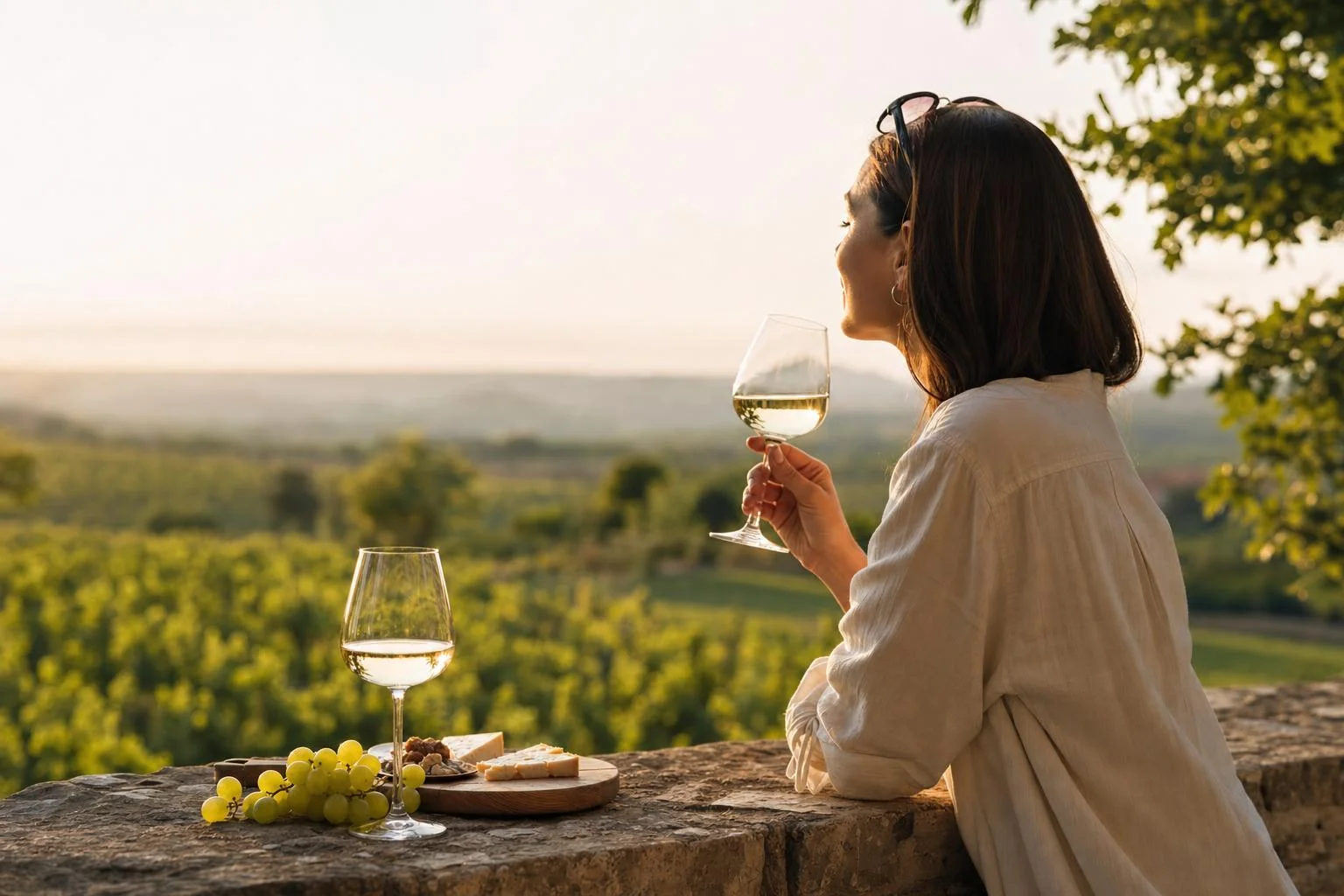
Istria is one of Europe's most exciting wine landscapes — a compact peninsular region with diverse terroir, indigenous varieties and winemakers who, each in their own way, transform stone and sea air into a glass of wine. Yet that very diversity, which makes Istria so captivating, is also the reason why a truly great private tour is not something that can be improvised at the last moment. Planning the right itinerary — one that suits your tastes, pace and wishes — requires preparation, the right contacts and an understanding of the region that goes far beyond what any tourist guide can offer. This step-by-step guide will help you understand everything that process involves and why each step carries its own weight.
Step 1: Define what you are actually looking for from a wine tour
Before you begin searching for wineries or arranging bookings, ask yourself a few fundamental questions. Are you primarily interested in tasting indigenous varieties such as Istrian Malvasia or Teran? Or are you drawn to the story of biodynamic viticulture, family cellars with generational tradition, or modern winemakers experimenting with natural wines? The answers to these questions shape the entire itinerary — because Istria offers all of the above, yet each option leads to a different part of the peninsula and to different hosts.
It is equally important to define the pace of your journey. Some travellers wish to visit three or four wineries a day and explore the region thoroughly over the course of a week. Others prefer a slower rhythm — a morning visit to a single winery, an afternoon stroll through olive groves, dinner with the winemaker. Neither approach is wrong, but they differ dramatically in terms of organisation: a faster itinerary demands precise time management and firm reservations, while a slower one requires accommodation that is strategically positioned between destinations so that you are not covering long distances every day.
Group size is another factor that is often underestimated at the planning stage. A private tour for two opens the doors of cellars that receive guests exclusively by prior arrangement and never welcome larger groups — these are precisely the places where the most intimate and most profound tastings take place. Groups of six to ten have different opportunities and different challenges, particularly when it comes to arranging transport and choosing restaurants that can accommodate the entire group at the same time.
Step 2: Get to know the Istrian wine map — regions within a region
Istria is not a homogeneous wine region — within it there are several micro-zones with markedly different soil and climate characteristics. Western Istria, with coastal towns such as Poreč, Vrsar and Novigrad, is characterised by heavy clay soils and a mild Mediterranean climate that favours fuller, rounder Malvasias. Central Istria — Motovun, Buzet, Livade — sits on reddish flysch loam in the Mirna valley and produces wines of greater acidity and mineral tension. Southern and south-eastern Istria, around Vodnjan and Labin, is known for Teran and older indigenous red varieties.
Understanding these differences is essential to crafting a coherent itinerary. If you are interested in a vertical tasting of Malvasia — that is, comparing the same variety across different styles and vintages — it makes sense to move through a single micro-zone and visit wineries whose philosophy differs rather than their soil. If, on the other hand, you wish to explore a horizontal narrative of Istrian wine as a whole, the itinerary must encompass several zones, which automatically means more travel between locations and calls for well-considered logistics.
There are also wineries that are not situated along main roads nor marked with clear signage — they are reached via unpaved tracks that pose a challenge for standard vehicles, particularly after rain. Prior knowledge of the terrain, rather than GPS navigation alone, is invaluable here. A local expert who has personally visited these cellars knows which entrance to use, where to park and in what order to visit the sites so that no time is wasted on return routes.
Step 3: Researching and selecting the right winemakers — beyond a Google search
Istria counts around one hundred registered wineries, ranging from family micro-producers with an annual output of just a few thousand bottles to larger cellars with well-developed visitor facilities. The key question is not which winemaker is the most popular or award-winning, but which winemaker suits your profile as a visitor. A quietly reclusive farmer producing natural wine will have no dedicated tasting room or professional presentation materials — yet a visit to his cellar can be a more genuine and deeper experience than a standard corporate tasting.
Contacting winemakers does not always follow the same pattern. Some receive visitors only with advance notice of at least a week. Others have long waiting lists for private visits, particularly during the season from June to September. There are also those who never advertise their winery publicly and receive exclusively visitors recommended by someone they trust — gaining entry to that circle requires a network of relationships, not merely an e-mail message. This is precisely where the essential difference lies between a self-planned tour and one organised by an expert with established ties within the wine community.
When selecting winemakers, consider the balance of the programme as well. An itinerary consisting exclusively of small, experimental wine estates can be demanding for someone who arrives without a deep prior knowledge of natural wines. Conversely, a tour that adheres solely to established, commercial labels will not satisfy the curiosity of an experienced wine lover seeking something unavailable in a shop. A well-structured programme finds the right balance — and that balance comes from experience, not from chance.
Step 4: Transport logistics — why it is more complex than it appears
Transport is the aspect of a wine tour most commonly underestimated during the planning stage, and most commonly responsible for problems during execution. Wine and driving do not mix — that is an axiom without exception, and in Istria, where wineries are scattered across hilltop villages connected by narrow, winding roads, driving your own car is not an acceptable option for either safety or practical reasons. Hiring a driver or arranging transport through a trusted service is the fundamental prerequisite of any serious private tour.
But transport is not simply a question of who drives. It is also a matter of how much time is lost travelling between locations, how visits are scheduled in relation to geography, and which type of vehicle suits the terrain. A van or minibus appropriate for a group of eight may not be able to reach some of the more rural locations — in which case a transfer or a smaller vehicle for the final stretch must be planned. These are all details an experienced organiser knows how to resolve in advance, while someone planning independently encounters them only on the ground.
The timing of visits must also be aligned with traffic conditions — July and August bring heavy tourist traffic on the main roads of western Istria, particularly around Poreč and Rovinj. If an itinerary is poorly timed, guests can spend a significant portion of the day in traffic rather than in a cellar. An experienced planner takes this into account and restructures the order of visits or adjusts departure times to avoid peak congestion.
Step 5: Accommodation that complements, rather than compromises, the wine tour
The choice of accommodation for a private wine tour in Istria is not simply a matter of comfort — it is a strategic decision that affects the entire rhythm of the journey. Staying in the centre of Rovinj may be aesthetically pleasing, but it means a long morning transfer to wineries in the interior. Conversely, an agriturismo in the heart of the Motovun forest places you at the very centre of the wine region, but limits evening outings and gastronomic options. Striking the right balance between location, comfort and access to key destinations requires an intimate knowledge of the region.
For lovers of wine and culture, staying at the winery itself or at an agriturismo with its own vineyard can be a singular experience — a morning walk through the vines, breakfast with the estate's own produce, an unhurried conversation with the winemaker free from the time pressures of a tour. This type of accommodation is not usually available through standard booking platforms; it requires direct contact and a personal recommendation.
If the tour spans several days and covers different parts of Istria, consider the strategy of a single base versus moving accommodation. A single base means less packing and unpacking, but more travel to each location. Changing accommodation every day or two makes for a richer experience of different surroundings, but is logistically more demanding. Neither option is universally superior — it again depends on the guests' preferences and the structure of the itinerary.
Step 6: Gastronomy as an inseparable part of the wine tour
Wine and food in Istria are inseparable — this is not a marketing cliché, but the reality of a region whose gastronomic scene is among the finest in Croatia. Every serious wine itinerary must include carefully chosen meals that complement the tastings. Lunch at a konoba serving homemade fuži with truffles alongside a local Malvasia is not simply a pleasant interlude between visits — it is part of the narrative of terroir, of the way in which the land, the climate and tradition together shape the flavour of a place.
Reservations at the finest Istrian restaurants — particularly those working with local seasonal produce and offering a short menu — need to be arranged weeks, and sometimes months, in advance, especially during the summer season. Walking into certain konobas without a reservation is simply not an option if you wish to visit the places that local connoisseurs recommend, and which are never overrun with tourists precisely because they appear in no travel guide.
Speak with your tour organiser about the possibility of combining a wine tour with a visit to a market, an olive mill, or a truffle-making workshop. Istrian gastronomy extends well beyond wine and truffles — there are extra virgin olive oils with exceptionally low acidity, prosciutto cured in the bura wind, and artisan cheeses. Each of these elements can become a highlight in its own right within the journey, provided it is planned in advance and woven into the logic of the itinerary, rather than added on a whim.
Why a private tour surpasses a group trip — and why an expert makes all the difference
Group wine tours serve their purpose — they are accessible, straightforward to organise, and offer entry to a standard repertoire of popular wineries. But by their very nature they are a compromise. The programme is designed for the average visitor, not for you. Wineries that receive coachloads of tourists daily are inevitably more commercialised and less inclined to linger in conversation, open rare vintages, or share candid stories about difficult harvests and failed experiments. It is precisely that — the honesty of a winemaker in their element — which a private tour can offer, and a group tour cannot.
The expert who organises private journeys — a sommelier, curator, art historian, or seasoned guide with deep knowledge of the region — not only knows which winemaker to visit, but knows how to talk with them. They know which questions unlock a better tasting, which estate offers an experience that pushes the boundaries of the typical, and how to adapt the programme on the spot should an unplanned yet exceptional opportunity arise. That flexibility and expertise are the foundations of a highly personalised journey that remains in the memory for years.
By investing in a professional organiser, you are not simply paying for logistics — you are paying for a network of relationships, specialist knowledge, and the ability to translate your preferences into a tangible and meaningful experience. The difference between a good and an exceptional wine tour often lies not in how many wineries you visited, but in how deeply you explored the story of each one.
Planning a private wine tour of Istria is not a complicated process — but it is a detailed one, and every detail carries its own weight. From the first conversation about your preferences, through the selection of winemakers, the crafting of the route, the organisation of transport and accommodation, to carefully reserved meals — each step builds an experience that is truly yours. If this seems like too much to manage independently, you are right: that is precisely why specialists exist who do exactly this every day. At Artvino & Co., every itinerary begins with a conversation with you — because there is no tour that suits everyone, but there is a tour that suits you perfectly.
Frequently asked questions
How far in advance should a private wine tour of Istria be planned?
For a well-crafted experience, a minimum of four to six weeks is recommended, while for the summer season (June–August) three to four months in advance is ideal. Some wineries and restaurants have long waiting lists, and thorough organisation requires time to coordinate every detail.
Can a private wine tour of Istria be arranged outside the main tourist season?
Yes — and it is often a better experience. Spring (April–June) and autumn (September–November) offer a quieter pace, a warmer welcome at wineries, and more authentic contact with winemakers who have greater time for conversation. The harvest period in September and October is a particularly attractive time to visit.
What are the indigenous grape varieties for which Istria is known?
Istria is best known for Malvazija Istarska (a white variety with floral and mineral notes) and Teran (a red variety of exceptionally high acidity and tannins). Beyond these, winemakers also cultivate Muškat Momjanski, Refošk, and a range of international varieties adapted to the Istrian terroir.
Is a private wine tour suitable for someone who is not a wine expert?
Absolutely. A well-organised private tour adapts to the knowledge and interests of each guest — from beginners eager to discover Istrian wine, to seasoned connoisseurs seeking rare vintages and conversations with winemakers about specific production techniques. An expert guide ensures that every visit is meaningful for that particular person.
Do you have an idea for a wine journey through Istria? Get in touch with your approximate dates and interests — we will craft an itinerary tailored precisely to you.
Request a quote