Blog
How to behave in the cellar: a brief guide to tasting etiquette for guests of private wineries
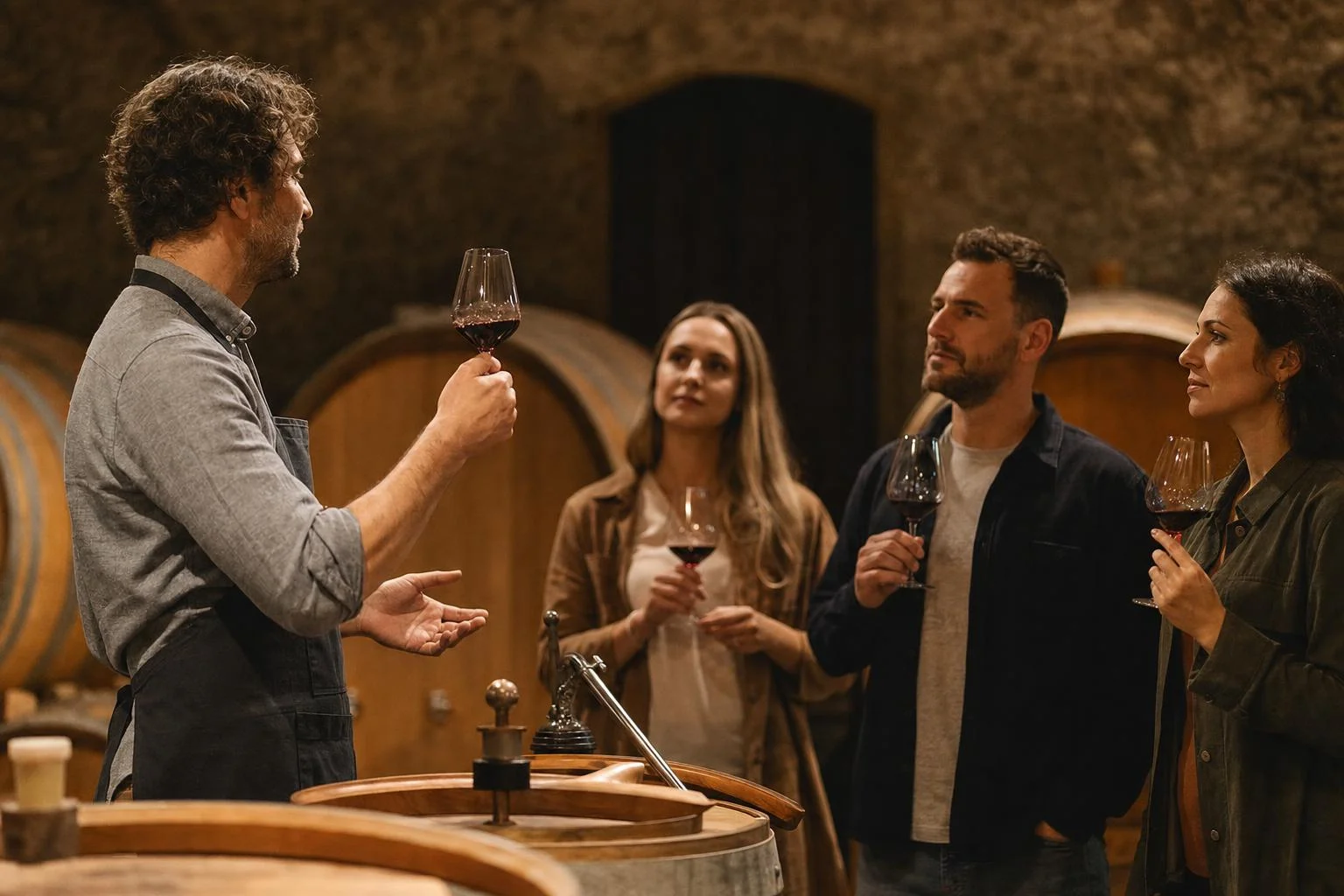
A first visit to a private winery can bring on mild nerves — will I know how to hold the glass, am I allowed to ask questions, should I spit out the wine or swallow it, and will the winemaker be offended if I don't buy anything? The good news is that private tastings don't follow a strict protocol like formal dinners, but there is a set of unwritten rules that every experienced guest knows, and which make the difference between a pleasant, relaxed gathering and an awkward situation. This guide is written precisely for those embarking on such a journey for the first time — without pretension, offering practical advice you can apply at your very next tasting.
Spit or swallow: there's no wrong answer
One of the most common questions beginners ask is: will the winemaker think I'm rude if I spit out the wine instead of drinking it? The truth is quite the opposite — spitting is a common and entirely accepted practice at every serious tasting, and experienced sommeliers and winemakers themselves do it all day without a hint of embarrassment. When tasting five, seven or ten wines in a row, spitting is not a sign of impoliteness but a sign that you're taking the tasting seriously and want to keep a clear head and a sensitive palate throughout the tour.
On the table or bar top there's usually a spittoon (in Italian called a sputacchiera), and if you don't see one, feel free to ask your host where it is or request that they bring you one. There's no need for shyness — this is a perfectly normal part of the tasting ritual, even in the most exclusive cellars.
If you decide to swallow every wine, that's a perfectly legitimate choice, especially if you're at a shorter tasting with fewer samples or simply enjoy the moment without an analytical approach. The one rule worth remembering: if you're travelling through several wineries in a single day or plan to drive, moderation and spitting aren't optional but necessary, and no winemaker will interpret this as a lack of respect for their work.
Perfume, deodorant and other scents to avoid
A cellar is a space where everything revolves around smell and taste, so one of the most important, yet most often forgotten, rules of etiquette is avoiding strong perfumes and scented cosmetic products before your visit. A powerful perfume doesn't just disturb you but also everyone else taking part in the tasting, as the scent spreads through the space and can mask the subtle aromas of the wine — which are, after all, the very reason you came.
The same applies to strongly scented hand creams, sun lotions, or even chewing gum with an intense mint flavour before tasting. The recommendation is simple: on that day, choose neutral or very mild cosmetics, and if you've spent the day at the beach or covered in sun cream, ideally shower or at least wash your hands before arriving.
Smoking immediately before a tasting has a similar effect on the palate's sensitivity, so experienced guests save their cigarette for the break after the tasting, rather than before it. This small gesture of consideration for your own senses and those of other guests is one of the simplest ways to show that you understand what a tasting is really about.
Questions worth asking the winemaker
Winemakers appreciate guests who ask questions the most — it is a sign of genuine interest, not an attempt to appear knowledgeable. Do not be afraid that a question will sound too basic; a winemaker would much rather answer a simple question than talk to a guest who stays silent and just nods.
A few questions that almost always open up an interesting conversation: which indigenous variety is characteristic of this area, and how does it differ from better-known international varieties? How was this harvest compared to previous ones, and how do weather conditions influence the style of the wine from year to year? Is barrique, stainless steel or perhaps amphora used here, and why that particular choice? Is there a family story or tradition behind a particular wine or label?
Questions that show you are thinking beyond the glass are especially welcome: about the size of production, about the philosophy of viticulture (a conventional, organic or biodynamic approach), about the challenges of selling in a small market such as Croatia's. Winemakers who run family cellars most often love talking about the soil, the climate and the generations before them who worked the same slopes — these are the topics that open the most honest and beautiful conversations.
Avoid, on the other hand, questions about the exact selling price per litre compared to the competition, or comparisons that sound as though you are assessing the profitability of their business — such questions can seem intrusive, even when asked out of pure curiosity.
Photography and filming in the cellar
Most winemakers are happy to allow photography of barrels, bottles and vineyards — it is part of the experience they want you to take away and share further. Nevertheless, etiquette dictates that you always ask permission before photographing, especially if you plan to film production equipment, labels in development, or areas that are not part of the usual tourist tour.
Some cellars have experimental plots, new vinification methods or products in development which, for business reasons, they do not wish to display publicly before launch. A brief question such as 'may we take photographs here?' shows respect for their work and prevents awkward situations.
If you are travelling with professional equipment, a drone, or plan to film video for commercial purposes, this is something that should be announced in advance, preferably already when arranging the visit, rather than spontaneously on the spot. The same applies to social media posts during the tasting itself — camera flashes and a phone pointed at the winemaker's face while they are speaking can be distracting, so it is more polite to wait for a natural pause in the conversation.
Tipping and buying wine on site
The question of tipping at wineries causes a great deal of uncertainty, as practices differ from country to country and from cellar to cellar. In many European wine regions, a tip at the end of a private tasting is not obligatory, but is gladly received if the guide or host has made a special effort, spent more time with you than agreed, or organised something beyond the standard programme. An amount of around ten per cent of the total value of the tasting, or simply a gesture based on your own judgement, is a common and acceptable practice.
Purchasing wine at the end of a visit is not an obligation, but it is almost always a welcome gesture of gratitude, especially with smaller family producers for whom direct sales to guests make up a significant part of their income. You don't have to buy a case if that wasn't your plan — even one or two bottles of the wine you liked best are enough of a gesture to show that you appreciated the time and effort the winemaker invested in you.
If you do decide not to buy anything, this is no reason for discomfort; experienced winemakers understand that not all guests can carry wine with them, especially if they're travelling by plane or have several more tastings ahead on the same trip. It's worth checking in advance, however, whether the cellar offers delivery or shipping of wine to your country, as this often resolves the dilemma and allows you to purchase without worrying about luggage.
Good etiquette also includes a realistic respect for the host's time: if a tasting has been arranged for a specific number of guests and a specific duration, arriving late or unexpectedly bringing additional people without prior notice puts the winemaker in an awkward position. Small private wineries often have limited capacity and staff, so any change of plan is best resolved in advance, rather than right at the cellar door.
Clothing, footwear and practical details for a cellar visit
Cellars are working spaces with uneven floors, steps, sometimes damp conditions and temperatures several degrees lower than outside — comfortable, closed footwear is therefore a more practical choice than sandals or heels, however elegant a tasting might sound. A lighter layer of clothing that's easy to remove or put on is also useful, as the temperature can vary considerably between the vineyard, the courtyard and the underground cellar.
Although private tastings are not formal events requiring a strict dress code, neat and appropriate clothing is a sign of respect towards the host and the space you are visiting, especially when it comes to family estates that open their own home to guests. Avoid clothing steeped in the smell of cigarettes or the beach, for the same reasons strong perfume is best avoided.
Finally, it's worth bringing a notebook, or simply using your phone, to jot down notes about wines you particularly like — names, vintages and grape varieties are easily forgotten after several tastings in a row, and such notes later make it easier to place an order or recall a favourite moment of the trip.
The etiquette of a private tasting essentially comes down to one simple idea: respect for the people who have put their entire work, and often family tradition, into what you're tasting. Spitting, thoughtful questions, restraint with perfume, briefly asking permission to take photographs, and a sincere gesture when it comes to buying wine are not strict rules but small signs of consideration that are recognised and appreciated in every cellar, from Istria to Tuscany. Once you relax with this knowledge and let yourself be carried by the experience, a tasting stops being a test of etiquette and becomes what it truly should be — an encounter with people, land and the story behind every bottle. If you would like your first such encounter to be flawlessly organised, with trusted hosts and an itinerary tailored to you, we would be delighted to design it together with you.
Frequently asked questions
Is it acceptable to spit out wine during a tasting at a private winery?
Yes, it is absolutely common and entirely acceptable. Spitting is a sign of a serious approach to tasting, not rudeness, and winemakers themselves practise it too.
Do I have to buy wine after a tasting at a private producer?
Purchase is not obligatory, but it is a lovely gesture of gratitude, especially at small family wineries. Even a single bottle is enough of a gesture if you enjoyed the wine.
How much should you tip the guide or winemaker at a private tasting?
There is no strict rule, but around ten per cent of the tasting's value, or a free gesture at your own discretion, is common practice when the host has made a special effort.
Am I allowed to take photographs in the cellar during the visit?
Most winemakers allow it, but it is polite to ask permission first, especially for photographing equipment, new products, or areas outside the standard tour.
If you are planning your first visit to private wineries and galleries, get in touch with us — we will design an itinerary in which you will feel safe and welcome from the very first moment.
Request a quote